For most of a decade, “bitcoin mining in Canada” meant three names: Hut 8 out of Alberta and Ontario, Bitfarms out of Quebec, and Hive out of British Columbia and Quebec. Read their latest filings and a different business appears. Hut 8 reports 949 megawatts of contracted AI data-centre capacity and US$26.6 billion of expected contract value. Bitfarms is now called Keel Infrastructure, lives in New York, and has switched off every bitcoin miner it owned in the United States. Hive still mines at 24 exahash per second, but every growth target it publishes is denominated in GPUs.
This is not a rumour piece. Every number below is from the companies’ own quarterly reports and releases, and from the provincial power rules that did as much to cause the shift as the price of bitcoin. Figures are in U.S. dollars unless marked otherwise, because that is how all three now report.
Hut 8: from Alberta rigs to Texas gigawatts
Hut 8’s second-quarter results, published August 4, 2026, show US$74.9 million of revenue, of which US$72.5 million was “Compute,” the segment that houses both its bitcoin mining and its GPU cloud. The headline items are not about hashing at all: “949 MW of contracted IT capacity,” “approximately $26.6 billion of expected aggregate base-term contract value,” “$7.5 billion of investment-grade project financing secured to date,” and a development pipeline of “approximately 8,660 MW.” The quarter’s net loss of US$177.1 million came mostly from “$138.6 million of primarily unrealized losses on digital assets,” which is what happens when you hold 17,316 bitcoin through a down quarter.
The Canadian footprint is in the 10-Q. Revenue from Canada was US$2.7 million in the quarter, down from US$7.4 million a year earlier; long-lived assets in Canada fell to US$16.3 million from US$54.7 million at the end of 2025. The company sold its 310 MW portfolio of four gas-fired power plants in Ontario to TransAlta for closing cash of C$105.1 million. What remains here is mining at Medicine Hat and Drumheller, Alberta, with Drumheller “reenergized” in March 2026 by about 11,298 machines from American Bitcoin, roughly 3.05 EH/s, plus “five HPC locations across Canada” for its cloud business in British Columbia and Ontario.
The gigawatts are in the American South. River Bend, a 245 MW campus in St. Francisville, Louisiana, is “leased in its entirety to Fluidstack” with a “financial backstop provided by Google,” financed by US$3.25 billion of notes; Hut 8’s February release describes a “partnership with Anthropic and Fluidstack” under which it “will develop and deliver at least 245 MW and up to 2,295 MW of AI data center infrastructure.” Beacon Point in Nueces County, Texas, is a 704 MW campus fully leased in two 352 MW pieces, the first worth US$9.8 billion over its base term and “up to $25.1 billion if all renewal options are exercised,” to a tenant the company identifies only as a “high-investment-grade technology company.” Together the two Beacon Point leases carry US$19.6 billion of base contract value. Hut 8’s “energy capacity under management” was 710 MW at June 30, 2026, down from 1,020 MW at year-end, because the Ontario plants are gone and the AI campuses are counted separately as they energize.
Keel: the company that used to be Bitfarms
Bitfarms did the most complete version of the pivot. Its first-quarter results record that “on April 1, 2026, Keel became the ultimate parent company of Bitfarms Ltd.” after a “redomicile from Canada to the United States and rebrand to Keel Infrastructure.” The second-quarter release of August 10, 2026 reports revenue of US$30 million, “down 50% year over year,” a net loss of US$65.0 million, and this line: “Completed the decommissioning of all U.S. Bitcoin mining operations in preparation for HPC site construction.” The company mined 354 bitcoin in the quarter, sold 1,085 bitcoin for US$75 million between April 1 and August 7, held 1,861 at the last count, and reports US$819 million of liquidity against a “development pipeline of 2.2 gigawatts.”
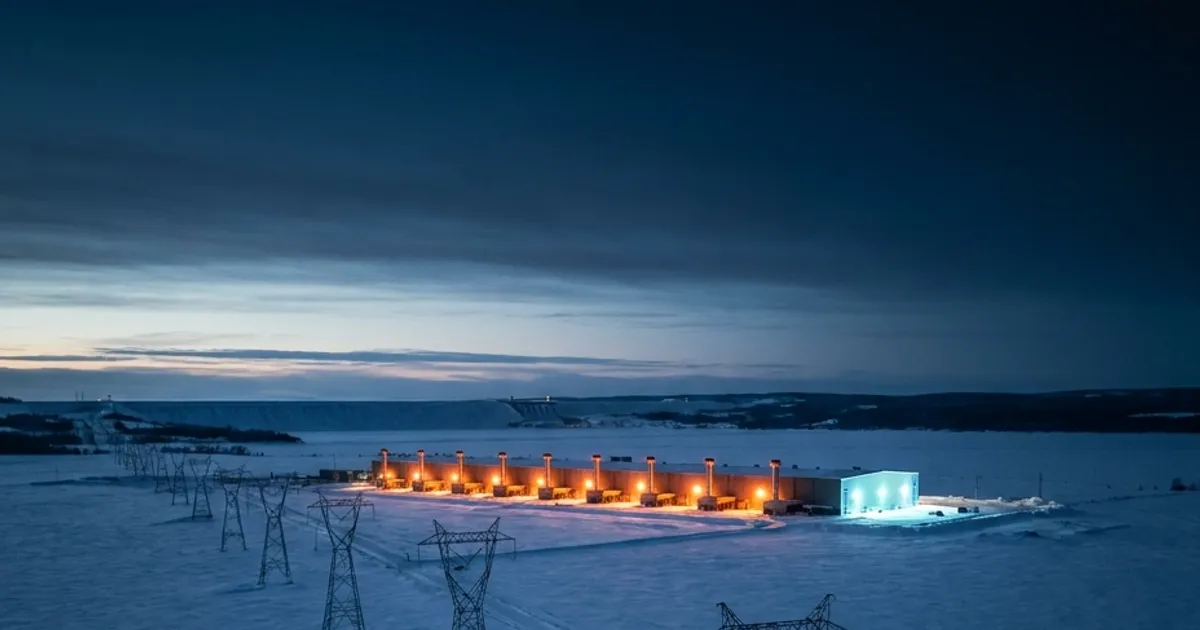
The 10-Q gives the dates: mining stopped at its Washington State site on April 28, 2026, to become an 18 MW HPC data centre, and at Panther Creek, Scrubgrass and Sharon in Pennsylvania on June 29, 2026. Quebec, where Bitfarms was founded, is the last place it still mines, and the filing is candid about why.
We maintain our legacy Bitcoin Mining operations in Canada to maximize the value of those assets as we work to transition our Québec sites to HPC and AI. Keel Infrastructure, quarterly report for the quarter ended June 30, 2026
The transition has a shape. On July 15, 2026 the City of Sherbrooke approved an agreement with Hydro-Sherbrooke to consolidate the power from three of Keel’s Quebec mining sites into a single 96 MW campus, “without requesting additional power,” and to change its use “from Bitcoin Mining to HPC and AI applications, subject to review and approval by Québec’s Ministry of Economy, Innovation and Energy.” Closing is expected in the first quarter of 2027. Until a ministry says yes, those 96 MW keep hashing.
Hive: still mining, selling GPUs
Hive is the one that has not left. Its results for the quarter ended June 30, 2026 show US$79.1 million of revenue, US$72.1 million of it from mining at 24.0 EH/s, with 1,004 bitcoin on the balance sheet and a net loss of US$142.9 million. The other US$7.1 million came from BUZZ HPC, its GPU cloud, “driven by the deployment of an NVIDIA B200 GPU cluster at its Manitoba, Canada, site.”
That US$7.1 million is the number to watch, because the contracts behind it are Canadian and large. On June 18, 2026 BUZZ closed a US$220 million, three-year contract to run 2,304 NVIDIA Grace Blackwell GPUs at Merritt, B.C., for Bell AI Fabric on behalf of Cohere, the Toronto model builder that sits in our directory. On August 17 it signed a US$350 million, five-year agreement for 2,016 Blackwell Ultra GPUs, also at Merritt, with an unnamed “investment-grade enterprise customer.” Contracted GPU cloud annual recurring revenue stands at “approximately $110 million” from about 7,800 GPUs. Hive’s pipeline runs through Canada: a 7.2 MW Toronto data centre it bought for C$12 million plus a million shares in September 2025, 70 MW in New Brunswick, 30 MW at Lachute, Quebec, and a “planned 320 MW GTA Gigafactory.” The targets are US$200 million of GPU cloud ARR by the end of 2026 and US$700 million of HPC ARR by the end of 2028. Its next 100 MW of mining, though, is going to Paraguay.
Smaller Canadian miners are following. DMG Blockchain, at Christina Lake, B.C., announced a pivot to a 50 MW liquid-cooled AI data centre in December 2025 and in June 2026 signed a letter of intent for 50 MW of AI colocation with a first phase targeted by December 31, 2026, running the site “primarily as a Bitcoin mining operation” until the deal is final.
The power rules that pushed
Miners go where electricity is cheap and available. In Canada, provincial utilities decided in 2022 and 2023 that crypto would get neither, and then rolled out the welcome mat for AI.
Hydro-Québec’s blockchain page sets a dedicated Rate CB of 18.078 cents per kilowatt-hour for any new crypto project of 50 kilowatts or more, on non-firm service that can be curtailed to 5 percent of peak “for a maximum of 300 hours” a year on two hours’ notice. The utility asked the Régie de l’énergie in November 2022 to suspend allocation of the remaining crypto block, and the Régie ruled on the provisional suspension on January 10, 2023. Since February 15, 2023, any project of 5 MW or more “must now be authorized by the Minister of Economy, Innovation and Energy,” which is the approval Keel’s Sherbrooke conversion is waiting for. The same utility’s data-centre page advertises rates “starting at C$5.05¢/kWh” and “over 99% clean energy.” Same electrons, roughly a quarter of the price, depending on what the racks compute.
British Columbia went further. On December 21, 2022 the province announced that “BC Hydro will suspend electricity-connection requests from cryptocurrency mining operations for 18 months,” citing a queue of “21 projects requesting 1,403 megawatts,” and in April 2024 it amended the Utilities Commission Act to allow regulations that “prohibit, restrict or regulate service for cryptocurrency mining projects.” Hive’s Merritt site sells GPU cycles to Cohere under those rules.
Alberta chose the other lane. Its AI data centres strategy, issued December 4, 2024, aims to “prioritize both off-grid and grid-connected power solutions,” and the grid operator reports that “all 1,200 MW of the interim connection limit was successfully allocated” to large data-centre loads, with a second phase under way. Hut 8’s Alberta mines sit inside a province that is now competing for the same racks. The policy side of that build-out, from the June 2026 national strategy to the rules banks and platforms answer to, is in our piece on Canada’s AI rules in 2026. Ottawa’s Sovereign AI Compute Strategy adds $2 billion over five years, including an AI Compute Challenge of up to $700 million with intake still open, which is public money for exactly the kind of Canadian GPU capacity Hive is building.
What it means for bitcoin
The network does not care. Hash rate was about 863 EH/s on September 5, 2026 by Blockchain.com’s estimate, with difficulty near 125.8 trillion, both records by a wide margin over the April 20, 2024 halving that cut the subsidy to 3.125 bitcoin per block. The halving is the other half of the story: the same machines earn half the coins, so the spread between a megawatt hashing and a megawatt hosting GPUs at contracted rates has never been wider.
Canada’s share does care. The Cambridge Centre for Alternative Finance’s April 2025 industry report put Canada at 7.1 percent and the United States at 75.4 percent of a sample covering about 48 percent of the network. That was before Keel switched off Pennsylvania and Washington, before Hut 8 sold its Ontario plants, and before Hive sent its next 100 MW to Paraguay. Nobody publishes a live country map anymore; Cambridge’s own stopped at January 2022. The direction is not in doubt.